
Formats
Business-ready Korean food formats.
Structured Korean food concepts designed for U.S. production, private label development, and scalable execution.
What Formats Are
Concepts built to be executed.
Formats are structured starting points for real production, designed to support U.S.-based manufacturing, private label development, and scalable execution.
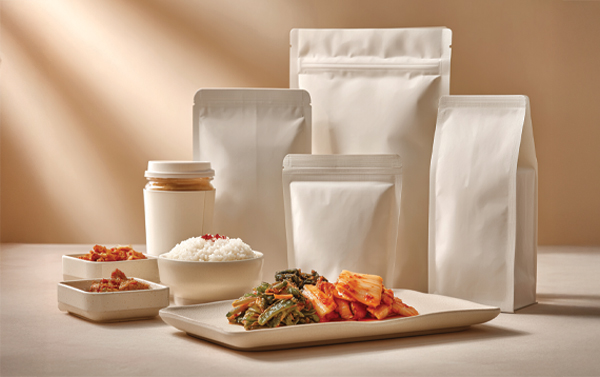
Built for execution, not presentation.
K-Fresh formats define how a Korean food concept should be produced, packaged, and executed in the U.S.
Each format outlines a complete execution structure — including
recipe direction, ingredient assumptions, packaging logic,
manufacturing approach, and logistics considerations.
This allows businesses to move forward with clarity, speed,
and fewer unknowns when entering U.S.-based production.
Format Categories
Different formats for different execution needs.
Each format represents a different execution model —
designed to support U.S.-based production, adaptation, and scalable development across Korean food categories.
1. Fresh-Mix Formats
Separated components designed to preserve freshness until the final step.
These formats keep key ingredients and seasonings separate, allowing final mixing or assembly just before consumption for maximum freshness and texture.
Examples: Fresh kimchi kits, mixed vegetable sides, salad-style Korean dishes
2. Ready-to-Cook Formats
Pre-structured ingredients designed for simple final preparation.
Formats are designed so consumers can easily cook or finish the product at home while maintaining consistent flavor and quality.
Examples: Tteokbokki kits, marinated protein packs, soup starter sets
3. Sauce & Base Formats
Foundational sauce systems built for repeatable production.
These formats focus on core flavor bases that support private label development, menu expansion, and scalable manufacturing.
Examples: Gochujang-based sauces, stew bases, seasoning concentrates
4. Spice & Seasoning Formats
Dry and semi-dry seasoning systems designed for flexibility.
Formats are optimized for shelf stability, controlled flavor delivery, and easy integration across multiple product lines.
Examples: Chili blends, soup powders, finishing seasonings
5. Modular Meal Formats
Component-based meal structures designed for flexible assembly.
These formats allow different elements to be combined, swapped, or scaled depending on channel, portion, or brand strategy.
Examples: Rice + topping meal kits, banchan assortments
6. Emerging & Custom Formats
New or partner-defined concepts under development.
This category covers custom formats developed with partners or new execution models that don’t yet fit standard categories.
Examples: Partner-defined or in-development concepts
Sample Formats
Examples of execution-ready Korean food formats.
These examples illustrate how K-Fresh formats translate Korean food concepts into structured, producible systems for the U.S. market.
Fresh Mix Format
Shake-to-Mix Kimchi
A fresh kimchi format designed for final mixing at the moment of use.
Shake Kimchi separates salted vegetables and seasoning base into distinct components, allowing consumers to mix and finish the product just before consumption.
This structure preserves freshness, texture, and flavor while extending shelf flexibility.
Execution use cases
Fresh side dish programs
Retail-ready refrigerated products
Modern reinterpretation of geotjeori-style kimchi
Format characteristics
- Separated fresh vegetables and seasoning base
- Designed for short-term refrigerated storage
- Final mixing triggered by the consumer
Retail advantages
Unlike traditional kimchi, Shake Kimchi does not continue fermenting during storage.
By separating vegetables and seasoning, the product remains stable until final mixing — resulting in less odor, more consistent flavor, and easier refrigerated handling.
This format reduces in-store mess, minimizes fermentation-related issues, and supports cleaner retail presentation.
Modular Meal Format
Fresh Premium Kimbap
A premium kimbap format designed for controlled assembly and storage.
This format structures rice, fillings, and seasonings as coordinated components, enabling consistent quality across different storage and distribution needs.
Execution use cases
- Premium grab-and-go programs
- Retail or foodservice expansion
- Brand-led kimbap product lines
Refrigerated Version
Designed for fresh consumption with short distribution cycles.
Fresh ingredient focus
Controlled assembly sequence
Optimized for local production and short shelf life
Frozen Version
Designed for extended storage and wider distribution.
Ingredient selection adapted for freezing stability
Production-ready for frozen manufacturing environments
Suitable for retail and bulk distribution
Spice & Seasoning Format
K-Magic Spice
A modular seasoning system that adds Korean flavor across multiple dishes.
Magic Spice is a blended seasoning format combining core Korean flavor elements, designed to be applied flexibly across different food categories.
Execution use cases
- Private label seasoning products
- Flavor enhancement for existing menus
- Base system for multiple Korean-inspired SKUs
Format characteristics
- Dry seasoning system with scalable blending ratios
- Designed for consistent flavor delivery
- Easily adaptable to different brand profiles
Potential components
- Chili powder
- Soup base powders
- Garlic, ginger, and pepper blends
Contact Us
Let’s talk about your project.